




Unlocking EV Adoption Through Stronger Residual Values
February 13, 2026 | Kaustav Sood, Marie McNamara (All authors are from RMI)
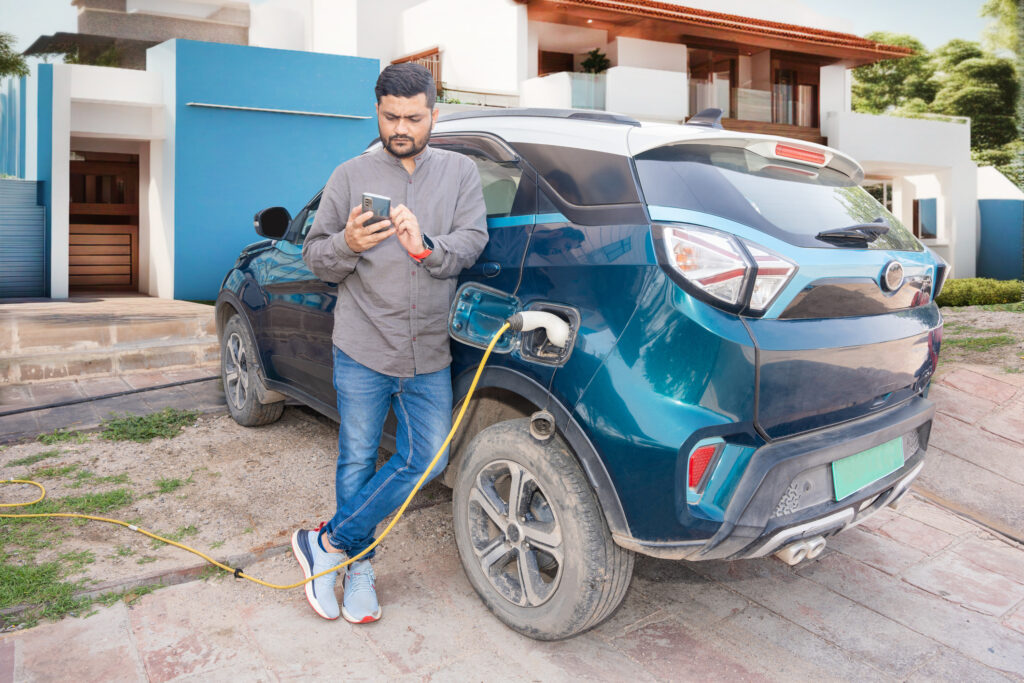
India’s electric vehicle (EV) market is reaching new highs. In 2025, 2.3 million EVs were sold, accounting for 8 percent of new vehicle sales. However, to meet long-term targets, reducing the affordability gap for lower-income consumers and those outside major metros will become critical.
For many buyers, used vehicles are the most affordable pathway to personal mobility. The used two-wheeler market is already 1.5 times the size of the new market, while the used car market is 1.3 times the size and is projected to grow to 1.7 times the size by 2030. A significant share of this demand comes from tier 2 and tier 3 cities and rural areas, highlighting their importance in scaling EV adoption. However, EVs remain largely absent from these segments. For this to change, used EVs must become more available, but that will require greater trust in their value and reliability, which is currently lacking.
A clear indicator of this trust gap is residual value, or the resale value of a vehicle after its first use. EVs tend to depreciate faster than comparable internal combustion engine (ICE) vehicles, with sellers often finding that their vehicles are worth only a fraction of the original purchase price, even after limited use. While this could appear to improve affordability for second-hand buyers, it signals deeper market concerns and carries negative implications for long-term adoption.
The drivers of residual value
An EV’s residual value is shaped by three factors: asset quality, the potential to recover value from used assets, and consumer willingness to pay. In a well-functioning market, depreciation would largely reflect physical wear and tear. In the current EV market, however, uncertainty rather than actual degradation is driving much of the value loss.
Battery condition is central, as it represents a significant share of an EV’s cost. It is typically assessed through state of health (SoH), which reflects capacity, efficiency, and overall performance. However, degradation is non-linear, and can accelerate sharply once SoH falls to around 50%–80%, making accurate assessment challenging. Physical testing requires standardised methods, while predictive models depend on large, high-quality datasets that are often unavailable or not widely shared.
Extracting value from a used EV is also challenging. Vehicles can be resold as a whole, or batteries can be separated for reuse, repurposing, or recycling. In practice, however, resale channels lack transparency, particularly around battery quality, which undermines buyer confidence. Secondary battery markets face additional constraints: pack designs vary widely, disassembly is complex, and most batteries are not designed for repair or diagnostics. As a result, many still-viable batteries are sold as scrap, especially in India, where common lithium iron phosphate (LFP) chemistries offer limited recycling value.
These structural challenges shape buyer perception. Used EVs are often seen as risky due to uncertainty around battery life, limited warranties, and constrained financing options. For price-sensitive consumers, discounted new EVs can feel like a safer choice than unsupported used ones.
This dynamic extends to the new vehicle market. Low and uncertain residual values make EVs harder to justify, finance, and insure on fair terms. While these challenges may ease as the market matures, residual value uncertainty remains a critical bottleneck — and a key opportunity to unlock trust, affordability, and scale in India’s EV transition.

Pathways to unlocking EV resale value
RMI’s recent report, Understanding Residual Value Uncertainty in India’s Evolving EV Market, draws on insights from original equipment manufacturers (OEMs), recyclers, fleet operators, and financiers to identify three priority actions.
First, improve transparency on battery health. This requires updating the Automotive Industry Standards (AIS) 156 safety certification to define battery-level data requirements, creating a unique identifier for each battery, similar to the European Union’s battery passport, and standardising methods for measuring SoH. Establishing a neutral certification body to validate battery condition will further help build trust across the value chain.
Second, strengthen resale infrastructure. This includes requiring resellers to disclose asset quality, particularly battery condition, and expanding access to financing and warranties for used EVs. At the same time, battery reuse, repurposing, and recycling need targeted policy support and stronger alignment across stakeholders.
Third, better manage risk. While residual value uncertainty cannot be eliminated overnight, it can be mitigated through risk-sharing mechanisms such as OEM buyback guarantees, performance-linked leasing, and insurer-backed residual value products. Encouragingly, some OEMs are taking steps: JSW MG Motor offers a 60 percent buyback guarantee on its MG Windsor model, while TATA Motors is investing in building a used EV resale ecosystem.
India’s EV transition is at an inflexion point. The next phase of growth will depend on more than new vehicle sales; it will require EVs to hold value and circulate through a healthy secondary market. Residual value is the backbone of that system. Strengthening it offers a clear pathway to mitigate risks, expand access, and scale EV adoption.