




Charging the EV Revolution: Powering Adoption Through Widespread Infrastructure
28th May 2025 , 12:00PM – 01:00PM IST
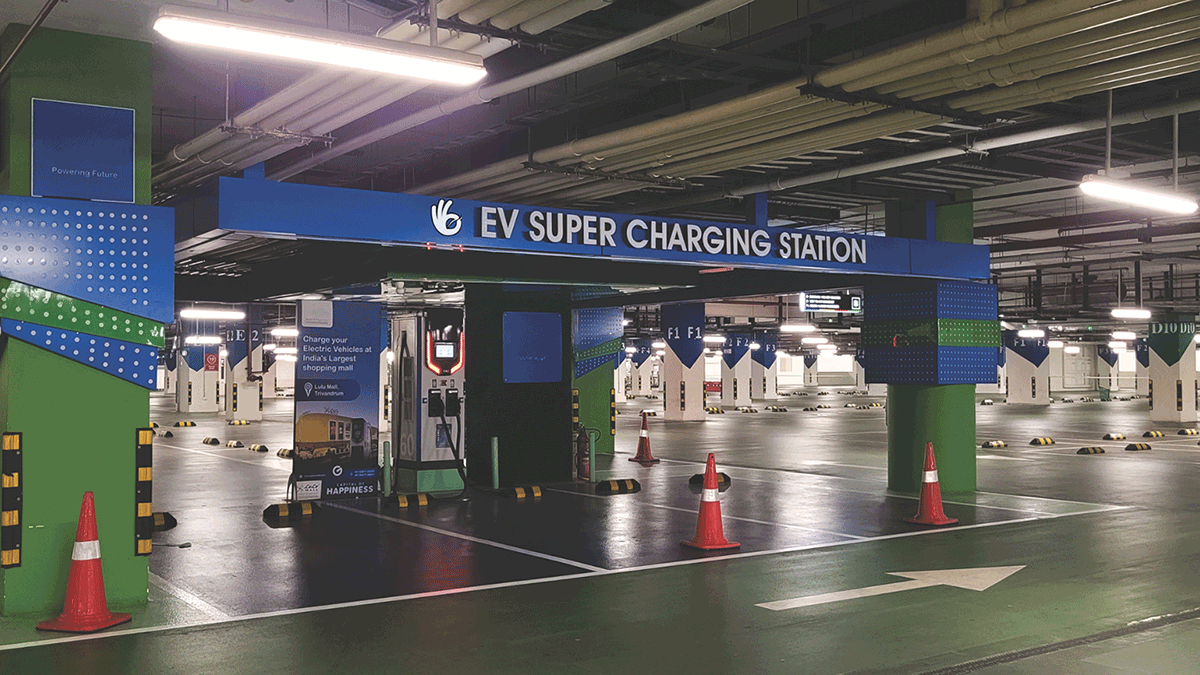
This episode of the Shoonya Webinar Series brought together leaders from across India’s electric mobility landscape to examine the EV charging infrastructure’s current state and future. With panellists representing Gentari India, SUN Mobility, VerdeMobility, and the United Kingdom Government’s Foreign, Commonwealth & Development Office (UK FCDO), the session offered insights into the enablers and obstacles shaping the growth of EV charging infrastructure.
One of the core themes emerging from the conversation was the need to move beyond the long-standing debate over whether vehicles or infrastructure should come first. Moderator Ms Samhita Shiledar aptly captured this shift in thinking, noting, “We have moved beyond the chicken-and-egg dilemma. The real challenge now lies in ensuring integrated coordination across EV demand and supply, infrastructure scaling, grid readiness, and technology innovation.” This was echoed by Mr Nikhil Thomas of Gentari, who pointed out, “It’s not about working in a closed environment and gaining market share but coming together as an ecosystem” — emphasising that collaboration, rather than siloed growth, is the only viable path forward.
The conversation underscored that India’s EV charging infrastructure cannot be built on imported templates. For it to be effective, it must be rooted in local realities — from grid conditions to user behaviour. As Mr Paresh Patel of VerdeMobility stated, “We have to make localised changes to the hardware in India, and then also make the software such that it is available in the Indian context”, emphasising that ‘Make in India’ isn’t just about manufacturing locally — it’s about developing solutions that are reliable, responsive, and purpose-built for India’s unique operating environment. This approach is key to enabling scalable and sustainable infrastructure growth.
From a policy and planning perspective, Ms Haimanti Poddar from the UK FCDO highlighted that “India is making fantastic progress in the uptake of EVs across various segments — mostly driven by national policies and sub-national policies.” She emphasised, however, that, “Customers need to be at the heart of any charging infrastructure ecosystem,” stressing the importance of an inclusive system design that centres user needs.
The discussion also explored innovative business models and technologies, particularly battery swapping, as critical enablers for high-utilisation segments such as ride-hailing and last-mile delivery. Mr Pramod Sharma of SUN Mobility shared real-world insights from their recent deployments, remarking, “Within six months of putting up a swap station, we are seeing 50% utilisation — that is how the market is growing. That is happening because we are meeting the price expectation of the customers using these services.” His remarks highlighted how aligning value propositions with user needs is accelerating demand.
The session concluded with reflections on the need to bridge the gap between persistent consumer misconceptions, especially around safety, accessibility, and network availability, and the ground reality of growing progress. Each panellist closed by offering one word to describe the future of EV charging in India. Words like “seamless,” “transformative,” “100-million-dollar opportunity,” and “optimistic” reflected both the momentum building across the sector and the immense scale of opportunity ahead.
As India accelerates toward its ambitious climate and mobility goals, one truth has become undeniable: charging infrastructure is no longer just a policy checklist item but the backbone of the nation’s electric future. To power the next chapter of India’s clean mobility revolution, this infrastructure must be inclusive, reliable, and uniquely designed to meet the country’s diverse needs.
You can revisit the discussion by accessing the full webinar recording here.